The Latest Home Automation Trends Shaping Smart Homes in 2026
The way we live at home is changing faster than ever. What was once a luxury reserved for tech enthusiasts is now becoming the standard for modern households. In 2026, smart homes are no longer about controlling a single lightbulb from your phone — they are fully connected ecosystems that learn your habits, protect your family, cut your energy bills, and adapt to your life automatically.
Whether you are building a new home or upgrading an existing one, understanding the trends shaping home automation this year will help you make smarter decisions about where to invest.
Key Takeaway: In 2026, smart home technology has moved beyond convenience. Driven by on-device AI, the universal Matter protocol, and a growing focus on health and energy efficiency, today's smart home anticipates your needs, protects your privacy, and can reduce energy costs by up to 30% — without you lifting a finger.
AI That Learns How You Live
Artificial intelligence is the biggest force reshaping home automation this year. Modern smart home systems no longer wait for commands — they predict what you need before you ask.
Today's AI platforms process dozens of data points simultaneously: your daily schedule, temperature preferences, sleep patterns, and even energy pricing. The result is a home that adjusts itself around your life.
Predictive thermostats pre-heat or cool rooms up to 20 minutes before you arrive
Lighting scenes change automatically based on time of day and your activity
Appliances schedule themselves during off-peak energy hours to save money
Voice assistants now understand natural conversation, not just rigid commands
All processing happens locally on your device — keeping your data private
The Matter Protocol: Every Device Finally Works Together
For years, the biggest frustration in home automation was incompatibility. Your smart lock did not talk to your thermostat. Your lighting app was separate from your security system. The Matter protocol is ending that era for good.
Matter is an open, universal standard now supported by over 550 companies worldwide — including Apple, Google, Amazon, and Samsung. Any Matter-certified device works across all major platforms simultaneously.
Buy any certified device and it connects to your existing system automatically
Devices communicate locally within your home network, not through the cloud
Your automation keeps working even when your internet goes down
Security is built in — all Matter communication is encrypted by default
One app can control lights, locks, thermostats, and cameras from any brand
Energy Management: Your Home Pays for Itself
Rising energy costs have made smart energy management one of the most practical reasons to automate your home in 2026. AI-driven systems do not just track your usage — they actively optimize it.
Homeowners with fully integrated smart energy systems are seeing utility bill reductions of up to 30%. Combined with solar panels and battery storage, some homes are becoming net energy producers.
Smart thermostats learn your occupancy patterns and heat or cool only when needed
Solar systems automatically sell excess power back to the grid during peak hours
Smart plugs eliminate standby "vampire power" from idle appliances
Battery storage systems keep your home running smoothly during outages
Real-time dashboards show your energy use, costs, and carbon footprint by the hour
Home Health Monitoring: Your Environment Looks After You
Indoor air quality has become a major focus in 2026 — and with good reason. Research confirms that indoor pollution levels can run five times higher than outdoors. Smart homes are now equipped to monitor and respond to these invisible threats automatically.
Beyond air quality, smart homes are integrating wellness features that support better sleep, improved focus, and long-term health outcomes.
Multi-sensor arrays continuously monitor PM2.5 particles, CO₂, VOCs, and humidity
Ventilation systems activate automatically when air quality drops below safe thresholds
Bedroom sensors track temperature and humidity to optimize your sleep environment
Biodynamic lighting shifts color temperature throughout the day to support natural energy levels
Health data stays local on your system — not shared with third parties
Security That Works Quietly in the Background
The best home security in 2026 does not announce itself. It works silently, adapts to your household's routine, and only gets visible when it truly needs to.
Modern AI security systems build a behavioral baseline for your home — learning the difference between your family's normal activity and a genuine threat. False alerts drop dramatically while real detection improves.
UWB smart locks detect your exact position and unlock only as you approach the door
AI cameras process footage locally — video never leaves your home unless you choose
Smart doorbells combine camera, motion sensing, and ambient lighting in one device
Humidity sensors automatically trigger bathroom fans, preventing mold before it starts
Security integrates with lighting to create a "lived-in" appearance when you are away
Robotics and Design: Beautiful Tech That Does the Work
Two of the most talked-about categories at CES 2026 were robotic home assistants and design-forward control interfaces — and both signal the same shift: smart home technology is becoming invisible and effortless.
On the robotics side, stair-climbing robot vacuums with embedded AI navigation now handle multi-level homes autonomously. Automated laundry robots can fold and stack garments. Robot mowers maintain gardens on scheduled patrols.
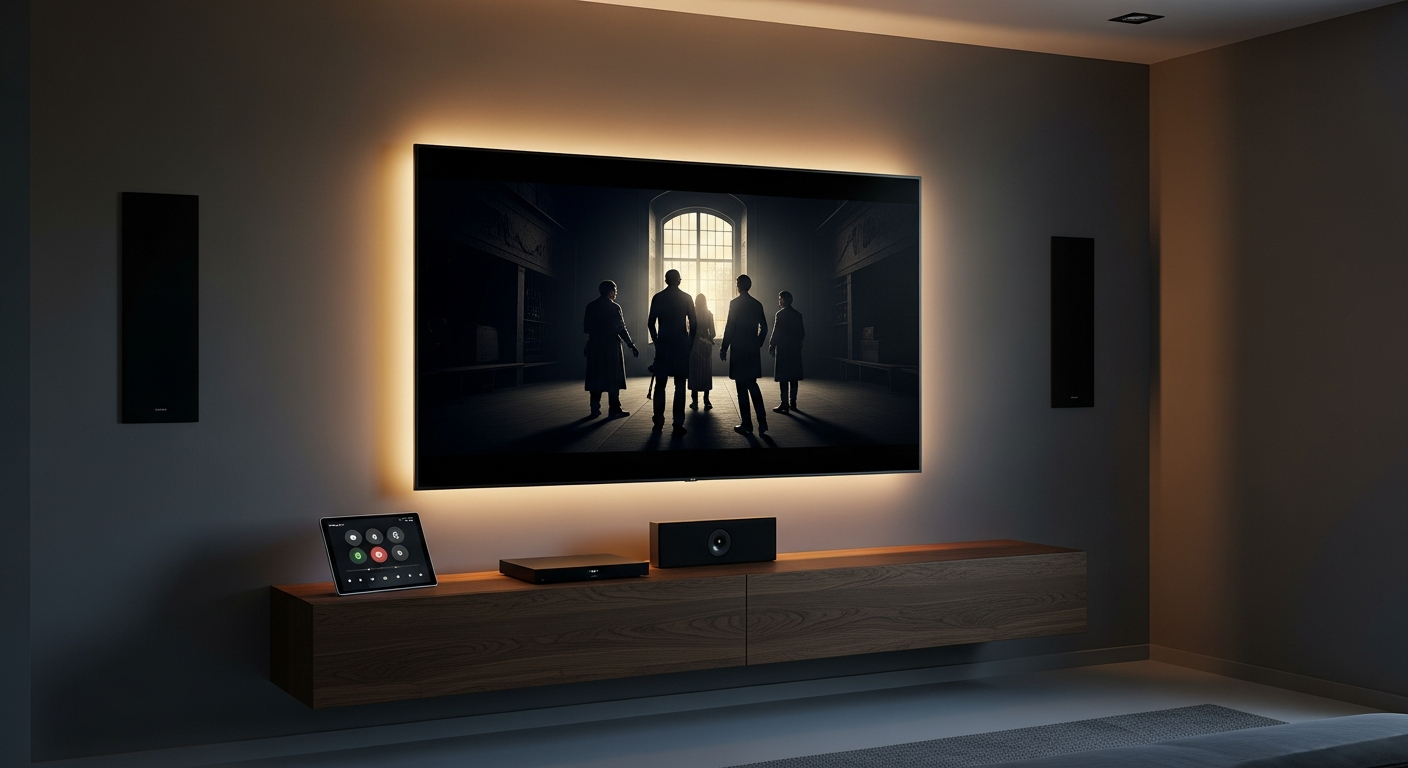
On the design side, the "ugly tech on the wall" problem is finally being solved. Control keypads now come in premium metal finishes. Glass touchscreens blend seamlessly into interiors. The goal is for the technology to disappear into the home — and only reveal itself when you need it.
Stair-climbing vacuums navigate entire multi-storey homes without manual setup
Laundry robots handle folding and stacking automatically after the cycle ends
Robot mowers learn GPS boundaries and maintain outdoor spaces independently
Designer keypads in curated finishes complement your interior rather than clash with it
Edge-to-edge glass touchscreens serve as both control panels and design features
Where to Start
You do not need to automate your entire home at once. The smartest approach is to start with the areas that impact your daily life the most — usually lighting, climate control, and security — and build from there.
Choose Matter-certified products from the beginning so every device you add in the future connects seamlessly. And if you are planning a full integration across multiple systems, working with a professional installer ensures everything is designed to work together from day one, rather than pieced together over time.
The intelligent home isn't a thing of the future. As of 2026, it's today's reality. The divide between a regular home and a smart one has never been simpler to bridge. Get in touch with us now to find out more.