Smart Lighting Ideas to Elevate Every Space
Lighting does far more than help you see. It sets the mood of a room, makes a space feel larger or cozier, and quietly shapes how you feel from morning until night. Yet in most homes, lighting is still controlled by a row of switches that someone placed on the wall decades ago.
Smart lighting changes that. With the right system, every light in your home can respond to a single button, a voice command, or simply the time of day. In this guide, the team at Quantum AV shares practical smart lighting ideas for every room — and explains how to plan a system that still feels effortless years from now.
What Makes Lighting “Smart”?
A smart lighting system connects your fixtures, dimmers and keypads to a central controller. Instead of each light working alone, they all work together. That single change unlocks a set of simple but powerful abilities:
Control from anywhere — a wall keypad, a phone app, a voice assistant or a touchscreen.
Smooth, flicker-free dimming, because the dimmers and light sources are properly matched.
Scenes that set several lights to different levels with one press.
Schedules that follow sunrise and sunset through the year, so nothing needs adjusting in winter.
Status feedback, so you can check from the airport whether the porch light is still on.
The technology matters less than the result: light that is always where you need it, at the level you want, without hunting for the right switch.
Start With Layers, Not Bulbs
The most common mistake is to buy smart bulbs first and think about the design later. Good lighting starts with layers.
The Three Layers of Light
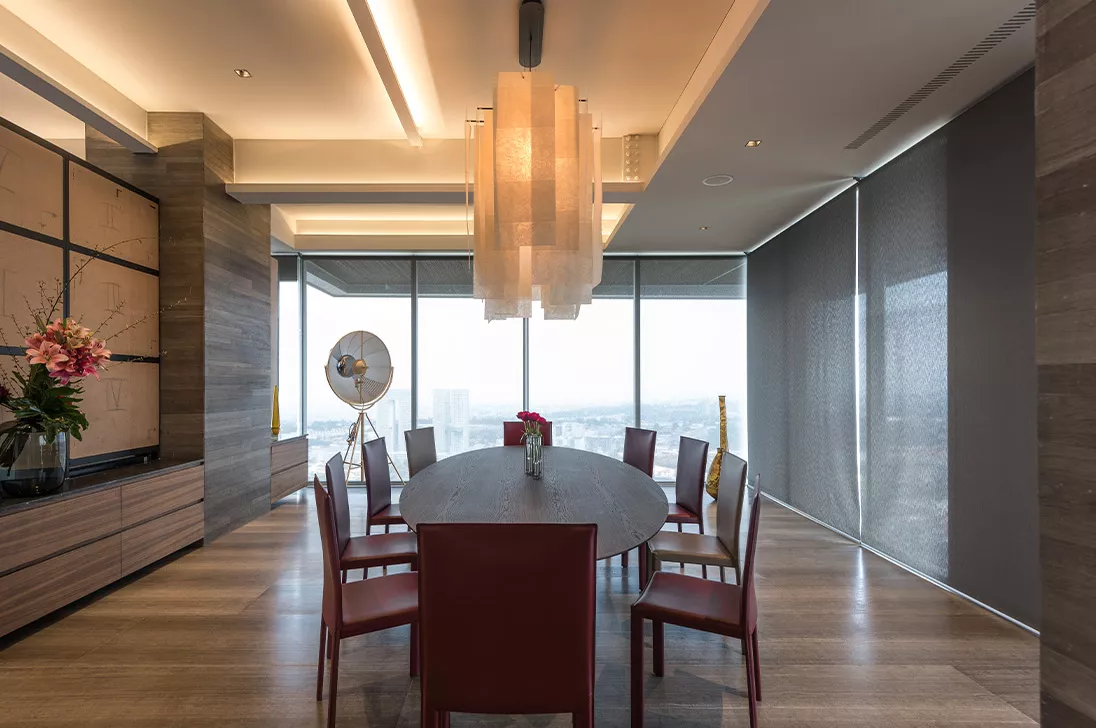
Ambient light fills the room and lets you move around safely. Recessed downlights, cove lighting and ceiling fixtures usually do this job.
Task light supports an activity: reading, chopping vegetables, shaving or working. Think under-cabinet strips, pendants over an island, and adjustable reading lights.
Accent light adds depth and drama. It highlights artwork, stone walls, plants, shelving and architectural details.
When each layer sits on its own dimmer, you can mix them freely. Bright ambient light for cleaning; task and accent only for a quiet evening. That flexibility, not the number of bulbs, is what makes a room feel designed.
A room with one bright ceiling light has one mood. A room with three layers of light has a dozen.
Room-by-Room Smart Lighting Ideas
The Living Room
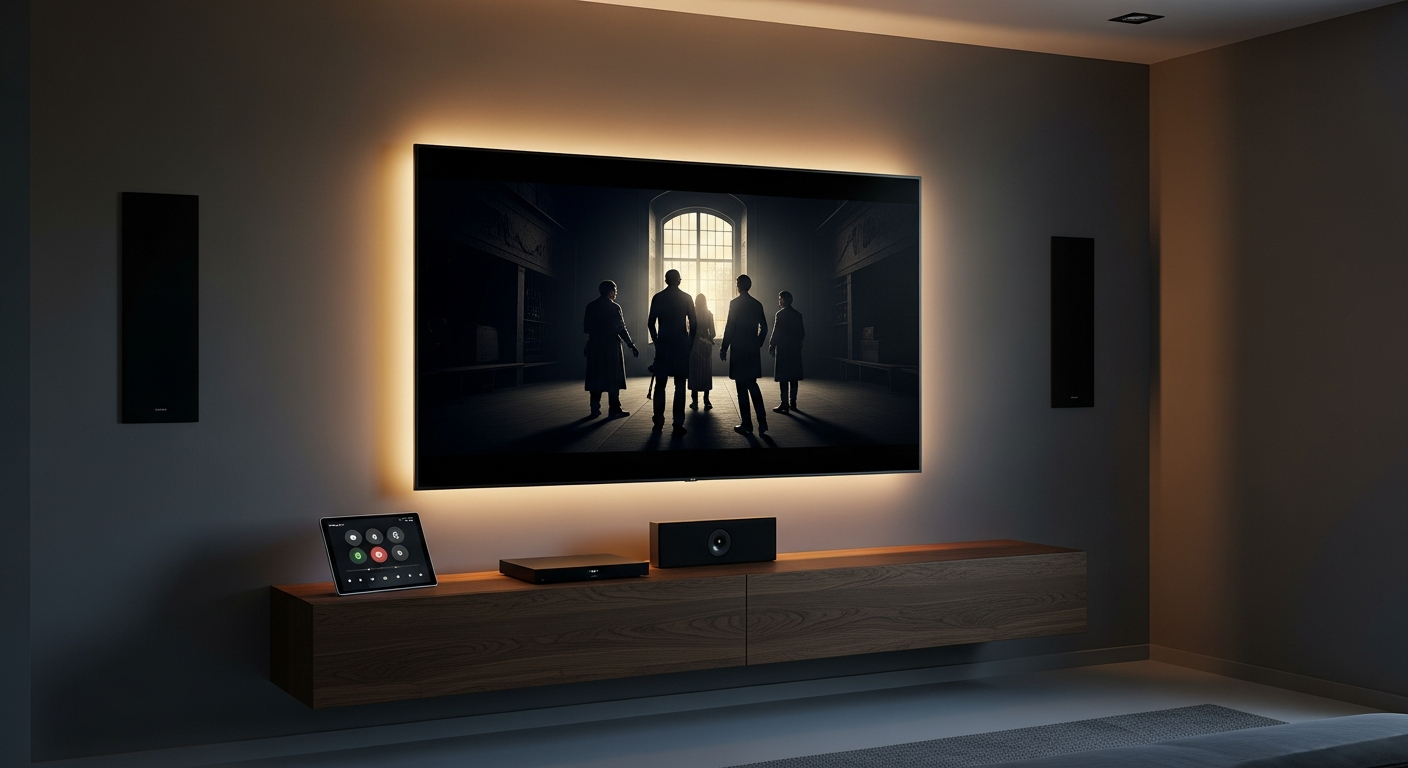
This is the room where scenes earn their keep. Program an Entertain scene that brings the downlights to 60 percent and lifts the accent lighting on your art. Add a Movie scene that dims everything to a soft glow, leaves a little light on the stairs, and lowers the shades at the same time. One keypad button replaces four trips around the room.
The Kitchen
Kitchens need honest, bright light for cooking and something far softer for late-night visits to the refrigerator. Under-cabinet lighting removes the shadow you cast over your own countertop, while pendants above the island give the room a focal point. A low-level Night scene at ten percent is often the feature people love most.
The Bedroom
Nobody wants to cross a dark room to reach a switch. A bedside keypad with Goodnight and Wake Up buttons solves it. Goodnight turns off the whole house and leaves a gentle path light to the bathroom, while Wake Up raises the lights slowly over several minutes — a much kinder start to the day than a bright ceiling fixture.
The Bathroom
Layering matters here too. Mirror lighting should fall on your face rather than the top of your head, so vertical fixtures on either side of the mirror work better than a single downlight. Add a dim floor-level scene that switches on automatically after midnight, and nobody will be dazzled at three in the morning again.
The Home Office
Cooler, brighter light helps concentration during the working day, and it should be steady enough for video calls. Aim the main light toward your face rather than the wall behind you, and keep a warmer scene ready for the evening, when the office becomes a reading room again.
Outdoor Spaces
Exterior lighting extends your living space and improves security at the same time. Wash the front of the house, light steps and paths for safety, and place a warm uplight on a favorite tree. Tie it all to a sunset schedule so the garden looks its best without anyone touching a switch.
Scenes and Schedules: Where the Magic Happens
Most people expect an app. In practice, the best smart lighting is the kind you barely operate at all. A well-designed system usually runs on a handful of scenes:
Good Morning — kitchen and bathroom lights rise gently at your usual wake-up time.
Day — most lights stay off while daylight does the work.
Evening — warm, layered light switches on at sunset, whatever the season.
Entertain — brighter social areas, softer edges, and accents on the details you are proud of.
Goodnight — the whole house off, path lights on, exterior lights on a timer.
Away — a realistic pattern of lights that makes an empty house look lived in.
Color Temperature and Your Body Clock
Color temperature is measured in kelvin (K). Around 2700K the light is warm and golden; at 4000K it is neutral and crisp. Tunable white fixtures can move between the two, and this is where smart lighting becomes genuinely useful for wellbeing.
Our bodies still respond to daylight. Cooler light in the morning supports alertness, while warmer light in the evening helps the body prepare for sleep. A circadian schedule shifts your lighting slowly through the day, so the change is felt rather than noticed. It is a small detail that makes a home feel calm.
Smart Lighting Saves Energy, Too
Comfort is the usual reason people upgrade, but the savings are real:
Dimming a light by 20 percent is almost invisible to the eye, yet it cuts energy use and extends fixture life.
Occupancy sensors switch off empty rooms — useful in hallways, garages and laundry rooms.
Daylight sensors reduce artificial light when the sun is already doing the job.
Schedules stop exterior lighting from burning all night.
How to Get Started
Walk your home at night. Note the dark corners, the switches you never use and the rooms that always feel too bright.
Decide what you want to feel, not what you want to buy. “The kitchen should be calm after nine” is a better brief than a product list.
Plan the wiring early. If you are building or renovating, separating circuits now costs very little and saves a great deal later.
Choose one system. Mixing several apps is the fastest way to make a smart home feel complicated.
Ask for a proper programming session. Scenes should be tuned in your home, at night, with you in the room.
Ready to See Your Home in a Better Light?
Smart lighting is one of the few upgrades you notice every single day. It makes rooms more comfortable, evenings more relaxing and mornings a little easier — and it does all of this quietly in the background.
At Quantum AV, we design and install lighting control systems that are planned around the way you actually live. If you would like to talk through ideas for your own home, get in touch with our team and we will help you plan every layer, room by room.